01
Distributive Politics & Credit Claiming
How governments time, target, and take credit for the benefits they deliver — and how those strategies convert policy into political support.
Political Science · Emory University
The Local Politics and Policy Lab studies how local governments, public policies, and elections shape political behavior and democratic accountability — with a global perspective.
We combine field and survey experiments, original administrative data, and causal-inference methods to understand distributive politics, housing and welfare, misinformation, and political representation.
What we study
We ask how the everyday machinery of local government — who gets what, when, and how they know it — we examine how public policy shapes citizens’ attitudes and behavior.
How governments target benefits, claim credit, and delegate services — and how voters respond.
Experiments, original administrative and survey data, and strong designs for credible causal inference.
Focused on democracies everywhere, with an emphasis on deep knowledge of Latin America.
Committed to transparency, replicability, and tools that make research more credible.
Research
Our work clusters around how local institutions distribute resources, how information shapes preferences and behavior, and how local institutions and information reshape elections, accountability, and representation.
How governments time, target, and take credit for the benefits they deliver — and how those strategies convert policy into political support.
How housing and welfare programs reshape political behavior, social cohesion, and well-being — and how the way benefits are allocated changes their effects.
How false information spreads through elections in the Global South — and what actually works to blunt it, from inoculation to fact-checking.
People
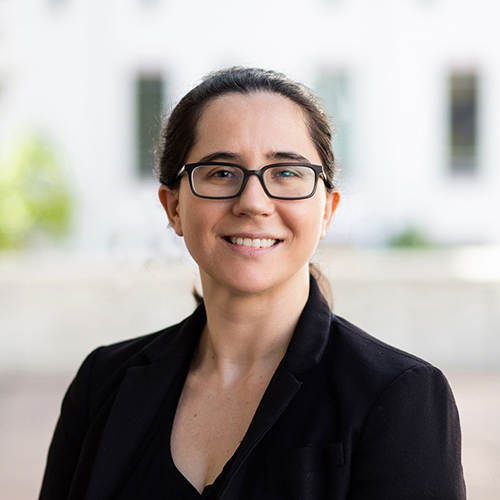
Principal Investigator · Associate Professor of Political Science, Emory University
Natália studies comparative politics and public policy, with an emphasis on how local governments distribute resources and information and how those choices shape elections, political behavior, and accountability. Her work draws on experiments, original administrative data, and causal-inference methods, primarily in Brazil and Latin America. She received her Ph.D. from Yale University; her research has appeared in the American Journal of Political Science, American Political Science Review, the Journal of Politics, World Politics, and Comparative Political Studies, among others.
She is a recipient of the APSA Urban and Local Politics Section’s Clarence Stone Scholar Award (2024) and the Harold D. Lasswell Award for best dissertation in public policy (2019).
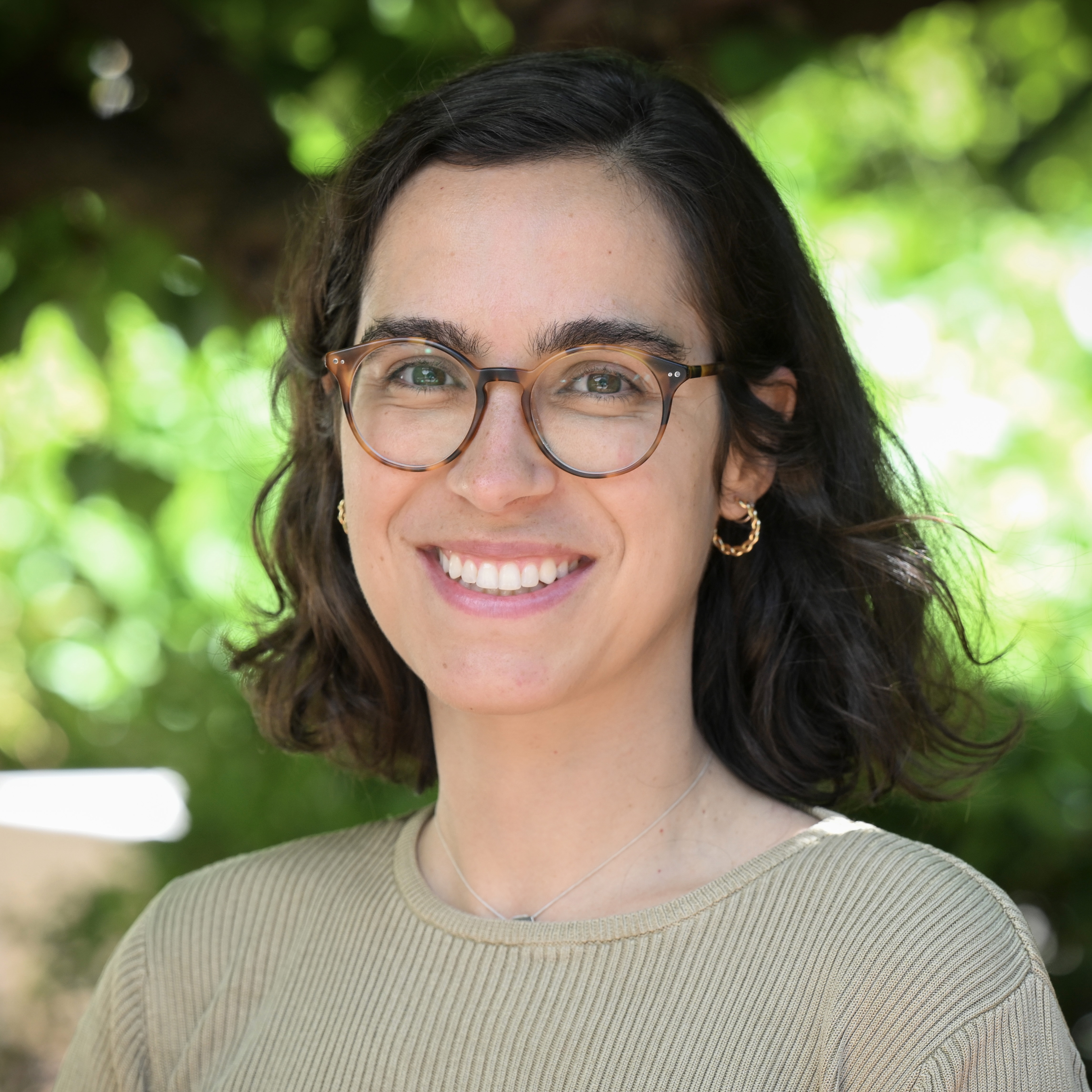
Principal Investigator · Postdoctoral Associate in Political Science, Emory University
Clara holds a Ph.D. in political science from UC Berkeley. Her research examines the determinants of collective land-titling reforms in Latin America and their effects on identity, governance, and political participation — with fieldwork on quilombo communities in Brazil — and she builds tools for causal inference, reproducibility, and research transparency.
Emory undergraduates join the lab as research fellows — working on data collection, coding, and fieldwork while gaining hands-on training in empirical social science.









Publications